Saturday, June 26, 2010

Cannonball Read #27: Never Let Me Go by Kazuo Ishiguro


I chose to pick up Never Let Me Go because Pajiba recently featured the trailer of the movie that is based on the Kazuo Ishiguro book, and all the comments were about how the book was completely heart-breaking at the end. Well, that intrigued me, and I guess I was in the mood to get my heart broken in a literary way.

Never Let Me Go is narrated by Kathy H., a young woman who begins by looking back at her childhood in Hailsham, a boarding school in England. The first part of the book talks about her relationships with her schoolmates, particularly between her mercurial (I really actually thought she was just manipulative) best friend, Ruth, and Tommy. There are many indications early on that Kathy's world might not be the same world that we live in because she tells us, in oblique ways, how the students in Hailsham are unique and special, and how their lives are basically mapped out from them since the beginning.

The Hailsham's students' purpose in life is not exactly a big mystery, though I hesitate to reveal it here because it might take the fun out of figuring it out. What was most interesting, to me, was how Kathy's narration made everything seem so matter-of-fact – so nonchalant – that the reality they live in really do not seem all that unlikely.

My favorite parts of the book were concerning the little fights that Kathy and Ruth had. It reminded me so much of my time in an all-girl school - times that I thought I had successfully blocked out but all came back to me while reading. It was just really interesting to see these childish, petty feelings be put into words (and even in rational terms!) when I felt like back then, for me, it was just all emotional "Me Me Me" feelings.

The later parts of the book deal with the reunion between the three friends many years after they have moved on from Hailsham, and how the mysteries from their childhoods were answered. Kathy H. maintains her tone of nonchalance throughout the book, which was quite disorienting to me, but I did appreciate it. I believe the ending did not affect me as badly as I anticipated because of the following reasons:

1) Kathy did not seem to be too torn up about it (she just accepted it!), and I was identifying with her for most of the book.
2) I had really high expectations for this "heart-breaking" ending, and because I saw it coming, it did not devastate me as much I thought.

All in all, it was actually a really good book. Though the writing was done in the voice of a young girl (Kathy narrated in a very natural way) I kept on reading because I just wanted to know what happened to the characters in the end. I think I will go back to it in a couple months just to see if my perception of it has changed because it seems like the type of book in which what you get from it can be different each time you reread it.

Monday, June 21, 2010

Cannonball Read #26: Anansi Boys by Neil Gaiman


I know that Anansi Boys is somewhat connected to American Gods in terms of mythology, but I think that's about where the similarities end. Though there are some familiar faces, I was still able to come to this with a clean slate of mind.

Fat Charlie Nancy has spent most of his adult life avoiding his father because he is constantly embarrassed by him. But when his father passes away abruptly, Fat Charlie has to return home for the funeral. There, he finds out from an old family friend that his father was Anansi, the spider-god or a god of mischief, and that he has a brother, Spider. Spider is charismatic and lucky and handsome; but he is also trouble. Fat Charlie invites Spider into his life, but then promptly wishes him out. However, Spider cannot seem to take no for an answer – he has probably never had anyone refuse him anything. So Fat Charlie decides to appeal to the other gods, gods who hated his father for his history of trickery, to help make his brother go away. Personally, I did not think Fat Charlie seem particularly smart.

That's basically the first third of the book. One of my favorite things about reading Gaiman is that I never know the twists he's going to take, and then he surprises me even more when he makes it all fit organically into a she-bang ending. All the threads of an event go off in multiple directions, yet they somehow end up in a climatic finale that does not feel forced. Anansi Boys – and now that I think about it, American Gods did this too – really makes me wonder how large a role Gaiman wants fate to play in his stories. In American Gods, it was implied at the end that the Gods had planned for the whole entire thing to go down (I'm being vague on purpose here). But in Anansi Boys, it's not quite so clear whether if Anansi had any idea about the shenanigans his sons would get into after his death. I liked that the gods were not quite so all-powerful this time around, and that there were other minor players that actually propelled the story forward.

Anyway, I really shouldn't compare this to American Gods since it's so different. One thing that I've really started to appreciate about Gaiman is that he really lets his readers draw their own inferences. He doesn't try to emotionally manipulate us - which is nice. However, the downside of it is that Gaiman's writing can seem a little bit cold at times. I sincerely think he's good, and I have a great time reading his books (I've read more Gaiman during the Cannonball Read than any other authors.) But I can't seem to muster up as much passion for it as when I think about any of Steinbeck's books – who incidentally, does occasionally try to manipulate his readers, so I guess that tells you how much I know what I want or like to read.

Wednesday, June 9, 2010

Cannonball Read #25: A Supposedly Fun Thing I'll Never Do Again by David Foster Wallace


The cover of this book really put me off. I know we are not supposed to judge by the cover, but it was equally creepy and hilarious. Plus, I don't like scary-looking children (I actually keep the book face-down so that I didn't have to look at that white-eyed kid.)

I guess it's in that way that cover is a brilliant indicator of this book. I've never read anything by David Foster Wallace, so I didn't know what to expect (scary children who get angry?) - but the collection of "essays and arguments" really went the range of laugh-out-loud-in-the-subway funny to downright depressing. And they were all creepy because Wallace put to words my thoughts about people that I would never have realized could be voiced if it weren't for him.

My two favorite essays were "getting away from already pretty much being away from it all" and the title essay. In GAFAPMBAFIA, Wallace is writing an account of the Illinois State Fair for Harper's magazine in New York. He regularly veers from shock/awe at the lifestyles that rural Illinoisans lead (Wallace decides during the farm stock judging - where cows, horses, pigs are showed off and prodded - that one can probably get a PhD in just cows based on how much was discussed during the proceedings) to just unadulterated appreciation (he was a very big fan of the Prairie State Cloggers Competition. A quote: "This is far and away the funnest, most emotionally intense thing at the Fair. Run, don't walk, to your nearest clogging venue.") Wallace grew up in Illinois but I guess he repressed a lot of the Midwestern likes/dislikes/general daily habits, because being at the State Fair had him analyzing them like a sociologist who was just let out of solitary confinement. Wallace was also accompanied by a childhood friend he named Native Companion who seemed to scoff at all his high-falutin' East Coast theories.

One of my favorite scenes comes after Native Companion was tossed and spun in a crazy ride called The Zipper, and the carnies kept staring as her dress went up over her head and making lewd comments. Native Companion came off the ride completely exhilarated ("That was fucking great. Joo see that? Son bitch spun that car sixteen times, joo see it?") and Wallace kept asking her if she minded that the carnies hung her upside down just to see up her dress, or that they were basically oogling her the entire time. He wonders if it's regional difference whereby Midwesterns appreciate fun but on the East Coast, the "politico-sexual indignation is the fun." He continues to expound on it despite her request for him to "buy me some porkskins, you dipshit."

Honestly, there's just so much going on in that entire essay. I used to live in Illinois for two years when I was a kid, but it was not rural or hicksville, so I definitely escaped some of that agro-raising/Nascar-worshipping (Wallace remarked that everyone except him in the spectator stands of Nascar event carried their own ear muffs) culture. Also, my sense of irony was really not honed at 12 years old so who knows. But I definitely recognized some of aspects that he brought up, like how everyone seems to wear shirts with slogans as if it were a badge of honor, even if the slogan was absolute crap ("WARNING: I GO FROM 0 TO HORNEY IN 2.5 BEERS" - Wallace tells the shirt vendor that HORNEY is spelled wrong.) I also absolutely remember that sense in which certain environments/activities are, as Wallace described, not racist but "aggressively white."

Anyway, GAFAPMBAFIA really had me giggling but what really impressed me was the title essay. It takes up about a third of the entire book, and Wallace is on yet another fish-out-of-water trip. This time, he's getting paid to write about his time spent in a luxury cruise liner that goes from Florida to the Caribbean. Wallace is definitely the odd one out at the ship (his East Coast sensitivities and all) and most of the essay is focused on how he is troubled and constantly bombarded by the fact that the cruise's staff were willing to fulfill his every whim. Another thing that disturbed him was how all of the cruise's brochures, announcements and constant organized fun on the ship was like parent telling a child, "You will have fun whether you like it or not."

What interested me the most were his ruminations on how the staff must really feel about constantly having the Professional Smile and trying to give the guests over-the-top-notch service. Wallace states it pretty early on when he tried to take his own duffel bag from a pile of luggage to bring to his room, and was stopped by a porter requesting to carry it for him. He said that it was not necessary, and dismisses the porter's zealousness, "high-pitched protests and his agonized expression as mere servile courtesy." However, Wallace later finds out that the porter was chewed out because a guest was seen carrying his own duffel bag, and it was such an assault to the cruise's "Guests must be pampered!!!" theme that an officer later came to his room to assure him that "ragged-necked Lebanese heads were even at that moment rolling down various corridors in piacular recompense for my having had to carry my own bag." Wallace ended it saying it was his fault and asking the officer to promise not to fire anyone. Wallace wrote, "...the whole incident was incredibly frazzling and angst-fraught and filled almost a whole Mead notebook and is here recounted in only its barest psychoskeletal outline."

I mentioned earlier that there were very depressing parts to this book, and so far I've only recounted the funny ones. I'm not sure if there is anything specific that I can remember, but it's definitely Wallace's voice that depresses me (which I guess makes no sense since I said he is funny.) He's extremely neurotic and sensitive, which is what puts him in these funny situations (There's a really funny story about how he was convinced that the cruise has people following him because every time he leaves his room and comes back, it's been cleaned by the maid, but he never catches the maid) But there were times when he was describing the cruise and its guests, and I was nodding along thinking, "Exactly!" and then feeling bad because I thought, "If I was on the cruise ship, would I really wanna be caught up with how ironic/hypocritical/funny everything is, or would I wanna enjoy myself?" I don't think it helps that I know he killed himself and it depressed me that I agreed – nay, identified with him.

Anyway, if you're going to read one story out of the collection, read "Supposedly Fun Thing." I myself skipped the giant thesis on television and on Michael Joyce's tennistry. I got 20 pages into the TV essay, realized that there were 20 pages more, and just flipped to the next story. I did enjoy the first story about Wallace being a tennis idiot-savant as a teen. All in all, I was really impressed by him and his writing style; I even appreciated all the footnotes he had. He made me want to explore more great, stylized writing just to see if I can develop a style of my own.

Cannonball Read #24: The Angel of Darkness by Caleb Carr


I picked up The Angel of Darkness after several people said that it was a worthy follow-up to my earlier Caleb Carr book, The Alienist. And I have to agree - in some ways, it certainly is. The Bad Guy (or should I say, Bad Person?) is definitely more interesting than the serial killer in The Alienist, and because she is a woman, there is a lot of talk about the feminine mind/psyche.

This time, the investigation is over the missing young daughter of a Spanish diplomat (Historically, Carr puts this right before the the Spanish-American War), Ana Linares. The husband does not want the wife the pursue the case because he is worried it might inflame the already-tense relations between the Spaniards and the Americans. So the wife goes to Sarah Howard, who has opened her own private detective firm for women, and asks her for her help.

Naturally, she recruits all her old pals for help. There's Dr. Kreizler (The Alienist!), John Moore (the journalist who's kind of a petulant child in this book), Marcus and Lucius (the Jewish detective-brothers who are a great help in the forensics department), Stevie Taggert (the young boy that Dr. Kreizler rescued from a life in jail, and Cyrus Montrose (servant of Dr. Kreizler, friend to all, good pianist player.)

What sets this second book apart from the first is that we know pretty early on who kidnapped Ana Linares. Libby Hatch, a woman who is described by John Moore as him not knowing whether if she wanted to "kill me or fuck me," appears to be a caring hospital nurse and kind mother, but the group suspects her of kidnapping and murdering young children. She is confronted near the beginning, yet the group cannot figure out where she has hidden the child. Once they figured out that this was probably not her first foray into infanticide, they decided to look into her past to see whether if she has had missteps before, and then bring her to justice for her past crimes. The last half of the book takes place in upstate New York, which is where Hatch was from before New York.

If this sounds like a very roundabout way to get to baby Ana Linares, then you would have an inkling as to how I felt reading this 600-plus page book. Yes, the villain this time is much more interesting, but there were parts that I felt Carr was trying to drag out. The book seemed to follow the same format (in terms of the detectives investigating the case) as The Alienist, and because I could sense the similarities, it frustrated me.

I should also add that though the first book was narrated by John Moore (petulant boy-man-journalist), this one was seen in the point of view of Stevie Taggert, which I felt was much more interesting. He is very close with Dr. Kreizler and is able to offer some insights on Kreizler, who is a bit of an enigma. Stevie is also able to talk frankly with Sarah, and observe the childish, easy rapport between everyone in the group.

As I said earlier, since the villain is a woman, there is a lot of discussion about females roles in American society. It's interesting to see how all the main characters react to some of the psychological theories (and this is where Carr just seems to reuse his script, in my opinion.) Dr. Kreizler would "humph," and say something about how none of his colleagues have anything extensive written about it; Sarah would say something insightful and then brandish her derringer just to show how she's such an avant-garde female; John Moore rolls his eyes and says things like "But a woman would never do that!!"; and Marcus and Lucius are always at the side arguing over some forensic detail.

Meanwhile, I read this all and think, "This 1800s female stereotype doesn't really apply anymore, and for that I am so glad for myself." I'm still not sure whether if the stereotypes are a fault of Carr's or just him trying to show that era's myopia about women. Obviously, the latter since Libby Hatch is the villain, thus proving the stereotypes wrong - but all of that (over-)explanation can really be taxing to this modern female.


PS. Why does Carr allow his publishers to choose such dreadful, unappealing book covers? I can go with the black-and-white and the non-sequitur Man Standing Ominously By The Carriage image - but does it have to be so fuzzy and grainy?

Wednesday, April 28, 2010

Cannonball Read #23: The Blind Assassin by Margaret Atwood


This was Jen K's selection for the Pajiba Book Club, and my second Margaret Atwood novel. I finished it last night and have had a little bit of time to think about it. Though I don't think I really liked it while I was reading it, I've decided that it's really very well-done and I like it better now that I've reflected on it a little bit.

Atwood has basically three stories layering upon each other. The first is a memoir of sorts by Iris Chase, now an old woman looking back at her life. The second story comes from excerpts out of a book, "The Blind Assassin," which was written by Iris' younger sister, Laura, who died 50 years earlier. And the third story comes out through following the inner monologue of Iris as she mulls about her current, old-age life. Inserted randomly throughout are clippings from newspapers and society tabloids which show what happened, at least according to the public's perspective.

Though Atwood's writing is beautiful, and she has some really interesting and masterful turns of phrases, it was really difficult for me to get into the beginning of the book. Iris Chase writes about her family history, and the upbringing of her and her younger sister, Laura. They are from a wealthy privileged family in a small Canadian town, growing up pretty much ignored by their parents since their mother died when they were younger and their father is too busy/stressed out/oblivious because of his work. I actually got kind of bored reading about Iris' childhood because – even though there are some telling things about the two girls' personalities that would later resonate in their adult lives – they really didn't do that much besides study with their tutors (one of whom liked Laura in a Humbert Humbert way) and get boss around by Reenie.

In contrast, there is "The Blind Assassin," written by Laura and published after her death, which was what I really enjoyed in the beginning. Two lovers meet in secret, and after the sex, the man tells the woman a made-up story of a beautiful city called Sakiel-Norn where the wealth comes from beautifully weaved carpets, all of which are made by child slaves. Their small hands can better manipulate the loom, and these children are worked so hard that they are usually blinded by this trade at a young age; after which they are sold off as sex slaves to brothels, where their "suave and deft" touches are of high demand. They are also good at picking locks, and those who manage to escape become hired assassins, slitting throats in the dark.

The stories the children whispered to one another – while they sat weaving their endless carpets, while they could still see – was about this possible future life. It was a saying among them that only the blind are free.

Come on, isn't that awesome? If it was reality, not so awesome; but as a story, or a story within a story, this premise is just so attention-grabbing and interesting. Very, very unlike the childhoods of Iris and Laura. Luckily for me, Iris' and Laura's story gets better (or worse) as they grow older, but I'm not going to give away any spoilers.

Instead, I will talk about some of the issues I had while reading it. One of the harder things for me to do was to listen to Iris' drone on and on about the daily on-goings of her life (but you already know that) and at the end of it, she would write something like, "But there is something I left out here. I know I am not telling you everything." (I'm paraphrasing, not quoting her.) And it's clear, when you get to the end, that she's left out plenty.

On the one hand, I like getting the surprise at the end (though I figured it out halfway through what happened and felt pretty good about myself when I confirmed it by searching for spoilers online.) However, I'm also the type of person who likes to know what's going on, and without the palpable tension or the promise of impending "drama" (for the lack of a better word), I was seriously ready at certain parts to just take Winifred's opinion that Iris was kinda a dumb, young girl who married rich. Though Winifred, who was Iris' husband's harpy sister, was just a dreadful person, and I say this even though I know we only see it from Iris' perspective.

Another thing I disliked were both Iris and Laura. As young girls (as described by Iris) they barely seem like real people, only caricatures of rich white girls. Iris does as she's told and doesn't really say or do anything; Laura is sanctimonious, has her head in the clouds, and is trying to prep herself for a life of martyrdom, which might have also been why things ended up the way they did.

I think - no, I'm sure Atwood did this on purpose. At least for Iris, Atwood made it seem like she had no personality on purpose, just to show how little people cared back then about a woman's real personhood. (Laura was just fucking annoying.) There was one point where Old-Age Iris said that though she is the same person, body-wise, there is no way she could recognize the young Iris as the same self as present Iris. I'm nowhere close to being described as old, but I can certainly understand that sentiment when I look back at my self from ten years ago.

I also hated that these two sisters refuse to stand up for each other. There seemed to me to be a lack of love between them. They tolerated each other, and they loved each other out of obligation, not out of love or need. In the end, to me, this entire novel wasn't about two sisters and their family drama and how this dramatic familial love (I say this while rolling my eyes) resulted in this epic dysfunction. It was really about how Iris quietly coped with her inner struggle during her youth, and how her repression of her self led to her downfall. This is similar to Laura too, who in the beginning seemed like she would bravely do whatever she want and defy societal standards, but in the end was just like every repressed female during that time: sewing her mouth shut while allowing/watching injustices being inflicted upon herself and her sex.

Man, this book depressed me. I'd like to also clarify that while Iris left out loads of helpful narrative bits (palpable tension, as I said above) in her "memoir," she certainly portrayed her bleak future very, very well. I never once thought she was going to end up in a happy place.

Yay, feminism!

Monday, April 12, 2010

Cannonball Read #21 and #22: The Graveyard Book by Neil Gaiman; The Jungle Book by Rudyard Kipling


Oh Pajiba, how I love thee. Just for you, I bought a hard-cover book so that I could read it for the Book Club discussion. It usually takes me ages to actually put down cold, hard cash for a book, especially for one whose spine is stiffer than my own.

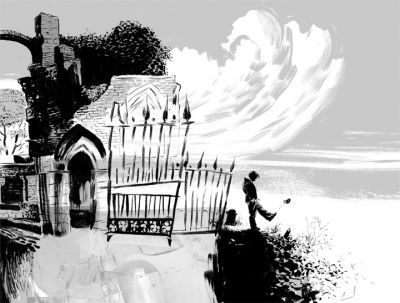
Lucky for me, The Graveyard Book was an awesome read. I literally devoured the pages (and yes, I used "literally" correctly because I was coughing up paper for days after) (ha ha, lame joke, just kidding - just wanted to annoy you grammar freaks) and finished it in a night, and after I was done, I was so sad. I wanted to know more about Bod's guardian, Silas, and I wanted to know how Bod got on in the normal world.

Nobody Owens, Bod for short, was raised in a graveyard by its ghostly residents. When he was a baby, he crawled into the graveyard in the night, pursued by a man who had just murdered the baby's family. The Owens, who have been dead for a long time, took him in as their own, and appointed Silas as his guardian. Silas is someone who belongs neither to the human world and the ghost world and is seen as very knowledgeable.

The entire book is basically about Bod's very special childhood, what he learns, and what he can do. I really liked the progression of how he went from being a child who asked a lot of questions to a teenager who was willing to stand up for himself and accept his differences as a part of himself.

Anyway, since this book is modeled after The Jungle Book by Rudyard Kipling, I picked it up next. I don't remember the Disney cartoon, so this was pretty much a fresh impression for me. I think I made the mistake of trying to see the similarities because even though the general structure is the same, the story is quite different.


Mowgli is adopted by a pack of wolves in the jungle. His family of wolves refuse to give him up to the lame tiger who hunts him. The tiger had to give up Mowgli when the wolves took him in because he knew that he would not be able to defend himself against a united pack.

I thought it was interesting that Kipling gave the jungle a set of rules that all the respectable animals felt they had to follow. For example, most of the animals don't believe in eating humans because they are the weakest creatures and cannot defend themselves. The wolves also scorn the lame tiger because he attacks cattle and they are slow and not much of a challenge. Monkeys are often ignored because they do not have a code to follow and therefore are not considered worthy of attention.

Mowgli's story was only for half the book. There was also stories of other animals, like a snow white seal that roamed the oceans for a perfect spot to raise a family, a shore that no humans have ever touched. I also enjoyed the story of the mongoose that defends a human family from the cobras living in their backyard.

I do sincerely wish that I had read The Jungle Book when I was younger though. It's a very straightforward book, in terms of the character development and plot. There are also rhyme verses at the end of every chapter, so I can see myself enjoying that immensely as a kid – whereas now, I would want to rush through those. I'm glad I have read it, though (and I know it's almost criminal to say this) I think I enjoyed The Graveyard Book more. I liked how dark it was, and also how Gaiman once again touched upon his oft-used theme of personal growth and acceptance in the character of Bod.

Cannonball Read #20: The Amazing Adventures of Kavalier & Clay by Michael Chabon


Kavalier and Clay came highly recommended by Pajiba – it's number one on the Best of the Decade's list. Though I went in having high expectations, it did not disappoint. I was a little put off by Chabon's blending of historical writing and narrative writing, but once I got past the changes in tone, I was able to see that it is this mix that makes the story so much more compelling.

Kavalier and Clay are cousins who decide to create their own comic book hero during WWII. Chabon goes into the history of how the comic book hero came from the newspapers funny page, and how it has evolved to become its own genre. The Escapist, the costumed hero that Kavalier and Clay think up, is sent all over the world to fight Nazis, which was a pretty popular topic since this was in the middle of WWII.

Josef Kavalier, a Jewish Czech who escaped from Nazi-infested Prague, is intense in his ambition to "defeat" the Nazis through his art. He wants to get enough money so that he can bring his family to America. Sammy Clayman (shortened to Clay) has lived in Brooklyn all his life and is kinda the brains – and he definitely has the imagination for it – to the Escapist's adventures on their pages.

While reading this, it seemed like a fairly straight-forward plot: two boys want to get rich getting into comics; Josef falls in love, Sammy does not; tragedy happens, and the fall out is in the final third of the book. However, as I am trying to organize my thoughts about this, I really don't know if I can get to everything.

Kavalier and Clay is about being young in America when the possibilities are endless. That may sound like a good thing, but it really can go both ways, and for both characters, it does. The Escapist becomes extremely popular - yet the boys' wages are peanuts compared to what the publisher is getting; Kavalier may have fallen in love, yet he feels guilty about his happiness when he thinks of his family in Prague; and finally (this one broke my heart) Clay finds someone he loves, and in the end, decides that it's better to be alone than to ever get hurt again.

What I love about it is that Chabon doesn't make it an easy route for both our heroes. Neither of them really stumble back into their happy periods - it's almost arduous and painful to read the middle part because I kept hoping and hoping that everything would turn out all right. But I think that's also what I really like best about the book.

Thursday, March 11, 2010

Cannonball Read #19: The Handmaid's Tale by Margaret Atwood

I finished The Handmaid's Tale very quickly, but committing myself to write a review has been very difficult. Two weeks have passed so my impressions of it are not so fresh, and I will be doing this by memory. (Note to self: I should not wait two weeks to write reviews.)

Before picking this up, I had several friends tell me that I would probably really like Margaret Atwood's writing. I'm not sure if it's because my face screams "WOMEN IN DYSTOPIA" but to be honest, I was a little slow on the uptake with the story. The entire book is the account of Offred, a handmaid in the imaginary future Republic of Gilead. In this alternate reality, the population is slowly declining, and therefore, babies are priced above everything. As a handmaid, Offred's job is to get pregnant with a high-ranking Commander of the Republic, give birth to a (hopefully) healthy baby, and give it away to her Commander's cruel wife. This new society has also taken pleasure out of sex, and out of everything in everyday life. With Offred's story, we learn about life in Gilead, about how it was before, and how she feels about being valued only for her ovaries and not for anything else.

Throughout the book, I craved for Offred's descriptions of the past when things were close to our reality. I wanted to understand how they could go from a society such as we live in - to some weird, literal-Biblical living in such a short span of time. Offred could still remember having using her own money to buy things that she needed, choosing her own mate, having a child of her own. Now, as a Handmaid, she uses food tokens to get meals for the Commander's household; she is not allowed to let anyone see her face; and once a month, the Commander fucks her (and according to Offred, that is the only appropriate word) with his nasty wife in the same bed.

There are some things that made no sense to me whatsoever - like if these Gileans (is that what we call them?) were so hot to conceive, why only one baby-making ceremony a month? There was also mention of some Japanese tourists in the Republic, and how Offred just gawked at the women in short skirts. This implies, to me, that they might not have population problems in other parts of the world. So why not copulate with them if they wanted children so badly? The ending of the book, which is a speech by some scholar in the future who treats the account of Offred as historical text, explains a little about the history of how the Republic came about, and I also got the impression that Gilead society was kinda xenophobic. However, I felt like that still conflicts with their Ultimate Goal, which is to have babies and keep the population up.

Though now that I am typing this, I am actually very unsure what the Republic's Ultimate Goal was. The immediate take-away, from Offred's point of view, might seem like it is to have power over women. But the Commander is an example of one of the members of this society who is not happy with it, though he would never admit it because he is a dumb hypocrite. There seemed to a be a constant sense of unfulfillment in Gilead society, not just for the Handmaids, but also for the high-ranking officers.

Atwood's writing is strong, though it took me a while to get used to it. Even though her descriptions of the current Republic were realistic (in a way) and touching, it was hard for me to commit fully to it emotionally. Every now and a then, a question would pop up in my head about some random point, and I would try to suppress it. The result is that I came away with an image of a fake world feeling like it was a fake world. Does that make sense?

My favorite part was the end of the book, but not because it was the end. I thought it was so funny to read how the scholar was talking about Gilead like it was impossible that such a society ever existed, and that it was impossible for it to happen again. He talked about it almost like he was talking about a fairy tale. And I completely identified with that, even though chapters ago, I was all wound up over Offred's "adventure." It also answered some of the "logical" questions I had throughout the book, so that was nice that Atwood tied up the loose ends.

Thursday, February 25, 2010

Cannonball Read #18: The Bookseller of Kabul by Asne Seierstad

I was about twenty pages into The Bookseller of Kabul before I realized why it felt so familiar. An excerpt of it was included in the article packet for my Religious Reporting class in sophomore year, and I remember there being a note from the author, Asne Seierstad (cool name huh? She's Norwegian), saying that the Sultan (the bookseller) had read the book and disagreed with her portrayal of him.

To be honest, I felt a little tricked by the book's blurb on the back. I thought that it was going to be about how the Taliban rule had affected the bookseller's life, and perhaps there would be some political commentary about his ideals (which are Westernized). It ended up being a great deal about his personal life and about how he and the males of his family treat their female relatives. It's not that the latter is an uninteresting subject – I just didn't know I was going to get so worked up while reading it. I thought it was going to be more of an intellectual read instead of a "God, these people are so terrible to their moms/sisters/aunts" read.

Asne Seierstad is a journalist who lived with Sultan Khan (a fake name) and his family for three months because she wanted to write a book about him. She thought that Sultan was going to be a different Afghan – the new, post-Taliban-world Afghan man – because when she visited his book store, he seemed well-educated and supportive of Western ideals, such as democracy or women rights. However, she realized that at home, Sultan was just like any Afghan – the women of his house had literally no say in anything, and all his sons and younger brothers must obey everything he says.

His hypocrisy is evident in the way he treats his son. Sultan often complains that Afghans are uneducated, which is why the country can never progress (he is a big talker about "progress.") However, he refuses to send his sons to school because he says that they must help him in his bookstores.

In the chapters surrounding the women of his family, like his sister, Leila – who wakes up first to put out everyone's clothes for the day, and then goes to bed last because she must prepare the breakfast for the next day – it is so heart-breaking because Leila constantly tries to reach beyond the four walls of her house to the outside world, and is always pushed back down. Leila knows a bit of English and she wanted to be an English teacher. She keeps trying to apply for the license, but there are so many bureaucratic stops, not to mention societal obstacles. If her brother does not want her to be teacher, Leila cannot disagree.

For me, this was an incredibly frustrating book. I think that Seierstad's writing is much better suited for the news than for this format that the book took, which was kinda like a story. Seierstad's strength was in keeping her voice (and her opinions) out of the book. Leila's story (and the other stories) are told in a very neutral tone. It's a sad, frustrating topic that probably doesn't need more fuel; but I still wanted her to show... i don't know... some sort of indignance.

Of course, after thinking that, I felt guilty because I realized that I was imposing my Western ideals upon these Afghan customs. But is gender slavery really something that should be culturally ok?

Like I said, this was a difficult read, and the writing wasn't especially emotional (the topic is emotional enough) so I had trouble staying engaged with it. Parts of it were really interesting though because I got to better understand some Afghan customs, like how weddings are arranged and how a prospective bride and groom are supposed to behave. Stories like those were told in a gossipy way, so it made it more fun to read.

Tuesday, February 23, 2010

Cannonball Read #17: Lolita by Vladimir Nabokov (Definitely, there are spoilers.)

While reading and talking about Lolita on the Internet, I noticed that people would often quote some Vanity Fair review where Lolita is said to be "the only convincing love story of our century." It piqued my interest that the rest of the article is never referenced so I decided to do a Google search for it. My quick search became an extensive comb of the interwebs, and the only thing (ONLY thing that came up! I mean, this is the Internet, so that's pretty amazing) that came up was a blog post written by an English Lit grad student. Once I read the rest of it, I realized that the original Vanity Fair writer would probably have preferred the next sentence to be the pull-quote "of the century":
[Lolita] simply stood as one of the great examples of passion in literature, a deeply touching story of unfulfillable longing, of suffering through love, love of such ardor that though it concentrated on its subject monomaniacally, it actually aimed beyond it, until it flowed back into the great Eros that had called it into being.

This would more accurately describe my feelings toward Humbert Humbert's and Lolita's "love story."

This is my second round through the book, and I'm still really unsure about it. I know there's the whole debate going on about it not really being about HH's love for Lolita, but an obsession with her – and I would absolutely agree with that. On the other hand, HH was able to respect her wishes about not following him, and allowed her to move on with her life, even giving her all the money that really belonged to her mother. I feel like the love that Humbert has for her started out as a fetish, one that came from never being able to "climax" his relationship with his childhood sweetheart, Annabel. But he also stated, somewhere in the book (because I don't use bookmarks, so take my word for it) that Lolita became more than just an Annabel-figment; she is a more realized vision of whom he had always wished to be with, and whether if that vision started with Annabel, it really ended with Lo. Lee. Ta.

Whenever that above stops making sense to me, I only have to refer to the final paragraph in HH's novel. He stated that Clare Quilty should be killed because he, HH, had to make Lolita "live in the minds of later generations." Granted, the image of Lolita that we have is what HH sees, but what he sees is also what he falls in love with.

Wanting to express my thoughts on this is incredibly frustrating, and maybe the fact that this is so hard for me to put into words means that it is, indeed, just a mere obsession. Yet I can say that, and still I believe it's a love story. It is certainly not a good love, or a perfect love, and it is not the type of love we aim for in our relationships. But I have read those thousands and thousands of words and I can still feel the aching that HH has for Lolita. I connect that to something more than him wanting to possess her.

I can also feel my revulsion and skepticism for HH. Reading the book is especially painful when he gives the first few indications that Lolita is unhappy during his travels with him. She cries every night after they have sex while he feigns sleep; then he mentions this fact off-hand, like it's just a pesky little afterthought to their wonderful year-long journey. The problem is that HH was always aware that he was in the wrong, which is why he resisted for so longe. Right after they had sex for the first time (where she, he said, was the one who seduced him), HH writes:
The beastly and beautiful merged at one point, and it is that borderline I would like to fix, and I feel I fail to do so utterly. Why?

Before they had sex for the first time, he often congratulated himself for catching a caress without violating the child. This little self-righteous pat on the back is soon forgotten once we get into the second half of the book. Instead, he focuses on keeping her in his sight at all times, trying to limit her social engagements so that he can keep track of her friends, and he did all that in the pretense of being a "good father," which even he was aware was a flimsy excuse.

When Clare Quilty enters the picture, it was almost a relief. Nabokov often slyly refers Quilty as HH's brother, and we can see how they are "related" because of their taste for nymphets (I just winced after typing that but I can't think of anything else.) Quilty could be like the evil twin brother, but after I was done with the book, I wasn't so sure. Quilty never thought there was anything wrong with his pornographic/pedophilic life choices. HH does, but still persists in doing it; and even after admitting the wrongness and acknowledging his guilt, he still continues it.

I feel really lucky to have obtained an annotated version of the book because that absolutely helped me with my understanding of the second half. By that point, I was so frustrated with HH taking turns between self-flagellation and self-indulgence that I was just confused about how I felt about him, or even with what he feels about himself. I mean, the man voluntarily admits himself to psych wards on a routine basis, for heavens' sake. I do not sympathize with him, but Nabakov's use of language really helped me to feel what he felt.

For example, I read most of the book on the train, and in the beginning of the book when HH was describing his longing for Lolita, I could actually feel the need he had for her and I started feeling self-conscious about reading it in public. Towards the end of the book, I understood why he had to find Lolita to ask her where Quilty was so that he may kill him - and I got that! I have no idea why, only that Nabokov's language made it so self-evident to me.

So yes, it is one of my favorite books but saying "because of the language" just doesn't seem to be a sufficient enough reason. The subject matter kept me engaged though it was very icky. I don't know, I don't know. All I know is that when I got done with the book, I closed it and looked around me, and it all still looks like the subway train I take to work everyday. But I felt weirdly changed, like I had just gone through an incredibly heart-wrenching break-up and somehow, I'm the one who came out intact. And I'm so surprised by that.

I always feel sad when I hear that people didn't enjoy it. And perhaps "enjoy" is the wrong word to use with Lolita, but I just feel so much for it.

"No," she said, "it is quite out of the question. I would sooner go back to Cue. I mean –"

She groped for words. I supplied them mentally. ("He broke my heart. You merely broke my life.")